

Bitter orange
Botanical name
Citrus aurantium L., Syn. Citrus aurantium L. ssp. amara Engl.
Family
Rutaceae
Common name
Seville orange, Sour orange, Bigarade
Information about the plant
Bitter orange, also known as Seville orange or bigarade, originates from the subtropical regions of north-eastern India and the neighboring areas of China and Burma. From there, it spread eastward to Japan and westward to the Mediterranean region. It reached Europe around the beginning of the Christian era and was the first citrus fruit of the New World.
Today, it is cultivated in many subtropical regions and is also found growing wild in the Mediterranean region, South America, and the southern United States. Bitter orange prefers sunny to semi-shaded areas and thrives in well-drained, fertile soils. It is commonly grown in gardens, plantations, and as an ornamental plant in urban areas.
The genus name Citrus is probably derived from the Greek word ‘kedros’, which refers to both cedar and citrus fruit, thus underlining the historical significance and its use in various cultures. The species epithet aurantium is derived from the Latin word ‘aurantium’, which means ‘golden’ or ‘orange’ and refers to the characteristic color of the fruit. The common name “bitter orange” comes from the Italian ‘pomo arancio’ (orange), which means “golden apple” and highlights both the color and the round shape of the fruit.
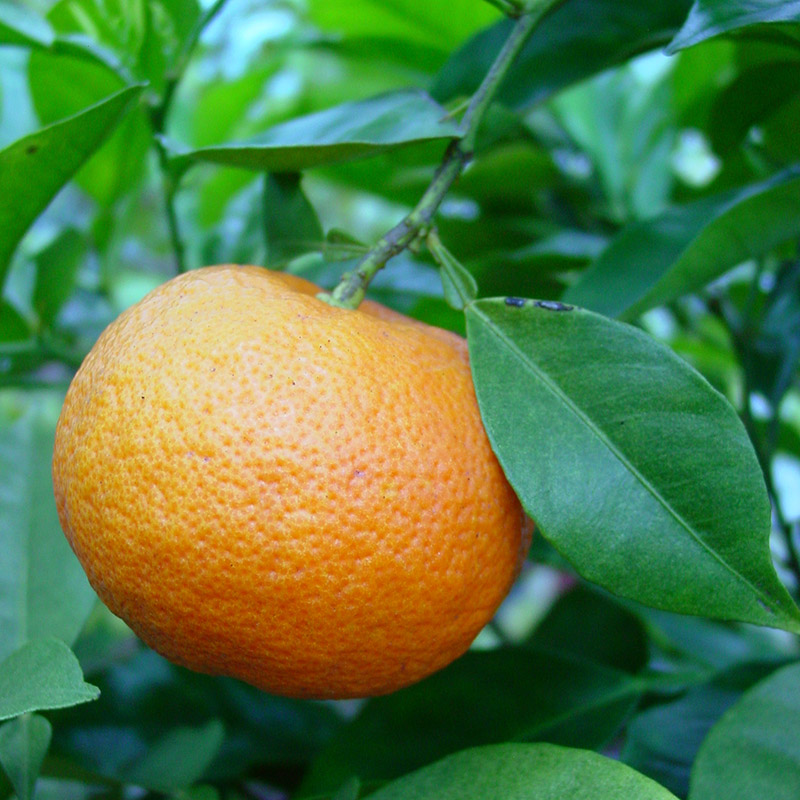
This evergreen tree grows up to 10 m tall and has thorny branches. The leaves are elongated-ovate, dark green, and leathery, with a blunt apex and a broad, rounded wedge-shaped base. The petioles are 2 to 3 cm long and broadly winged. The large white, radial flowers are strongly sweet-smelling. The fruits are mostly spherical with a dark orange-red, warty rind when ripe. It consists of a yellow-orange exocarp (the flavedo layer), and the spongy, yellow-white mesocarp (the albedo layer). The sour pulp is used to produce the popular bitter orange marmalade, while the mesocarp is candied to make orange peel.
Medicinally used parts of plants (herbal drug)
The aromatic, spicy-smelling peel of ripe bitter oranges is used, with the spongy white parenchyma of the albedo layer largely removed (bitter orange peel – Aurantii amari epicarpium et mesocarpium).
The commercially available drug comes from Spain, Portugal, Israel, and the West Indies.
The flowers are harvested as buds and used for medicinal purposes (bitter orange blossoms – Aurantii amari flos).
Constituents of the herbal drug
Bitter orange peel contains essential oil, which is stored in the oil glands of the flavedo layer. The main component is limonene, with numerous other monoterpenes and non-terpenoid aldehydes (including octanal, nonanal, and decanal), which significantly influence the aroma. The bitter compounds are mainly found in the flavonoids naringin, neohesperidin, and neoeriocitrin. Further constituents include furocoumarins, methoxyflavones, carotenoids, pectin, and cyclic peptides.
The protoalkaloid synephrine is found in very low concentrations in the peel and pulp of bitter oranges. Due to its structural similarity to ephedrine, it has a sympathomimetic effect. Extracts from bitter oranges (peel and fruit) are advertised as slimming products and sports supplements. These products are often mixed with compounds such as ephedrine and caffeine, among others, which can be harmful to health (cardiovascular system).
Bitter orange flowers contain essential oil, which is traded on the market as “neroli oil.” Its main components are the monoterpenes linalool and linalyl acetate, along with several monoterpene hydrocarbons. As with the peel, the bitter taste of the flowers is attributed to flavonoid bitter compounds (see above).
Quality of the drug
The quality of the following drugs and drug preparations is specified in the European Pharmacopoeia (Ph. Eur.):
- Bitter orange peel (Aurantii amari epicarpium et mesocarpium)
- Bitter orange flowers (Aurantii amari flos)
- Neroli oil/bitter orange flower oil (Neroli aetheroleum)
- Bitter orange peel tincture (Aurantii amari epicarpii et mesocarpii tinctura)
Monographs for bitter orange flower water (Aqua aurantii floris) and bitter orange extract (Extractum aurantii) are included in the supplement to DAB 6 (Erg. B. 6).
Medical applications
Recognised medical use
Bitter orange peel, bitter orange flowers, and neroli/bitter orange flower oil have not been reviewed by either the HMPC or ESCOP.
Traditional use
Bitter orange peel and bitter orange flowers have not been classified as traditional herbal medicinal products and are not listed as such (Article 16a of Directive 2001/83/EC).
In folk medicine, bitter orange flowers are used as mild sedative for nervousness and insomnia. The essential oil (neroli oil) has calming and antidepressant effects. It is used in folk medicine to treat anxiety and exam stress, as well as nervous cardiac disorders.
Herbal drug preparations in finished dosage forms
Bitter orange peel
- Alcoholic extracts and fluid extracts in drops
- Component of alcoholic compound distillates (Melissengeist)
Dosage
Finished medicinal product: see patient information leaflet.
Tea: Drink a cup of warm bitter orange peel tea several times a day. To stimulate the appetite, the tea should be taken half an hour before meals; for digestive complaints, it should be taken after meals. Daily dose: 4 to 6 g of the herbal drug.
Preparation of a tea
Pour approximately 150 mL of boiling water over 1 to 2 g of chopped bitter orange peel and strain after 10 minutes.
Notes
No studies have been conducted on the safety of bitter orange peel, bitter orange flowers, and neroli oil during pregnancy and lactation. The use in children and adolescents under the age of 18 is not recommended due to a lack of evidence.
Side effects
Bitter orange peel: Due to its furocoumarin content, photosensitization may occur, especially in fair-skinned individuals.
Interactions
Extracts and decoctions of bitter orange peel inhibit the absorption of cyclosporine (immunosuppressant).
References
Herbal drug monographs
Not available.
Further literature
Commentary on the European Pharmacopoeia (bitter orange peel, No. 1603; bitter orange flowers, No. 1810; neroli oil/bitter orange flower oil, No. 1175; bitter orange peel tincture, No. 1604)